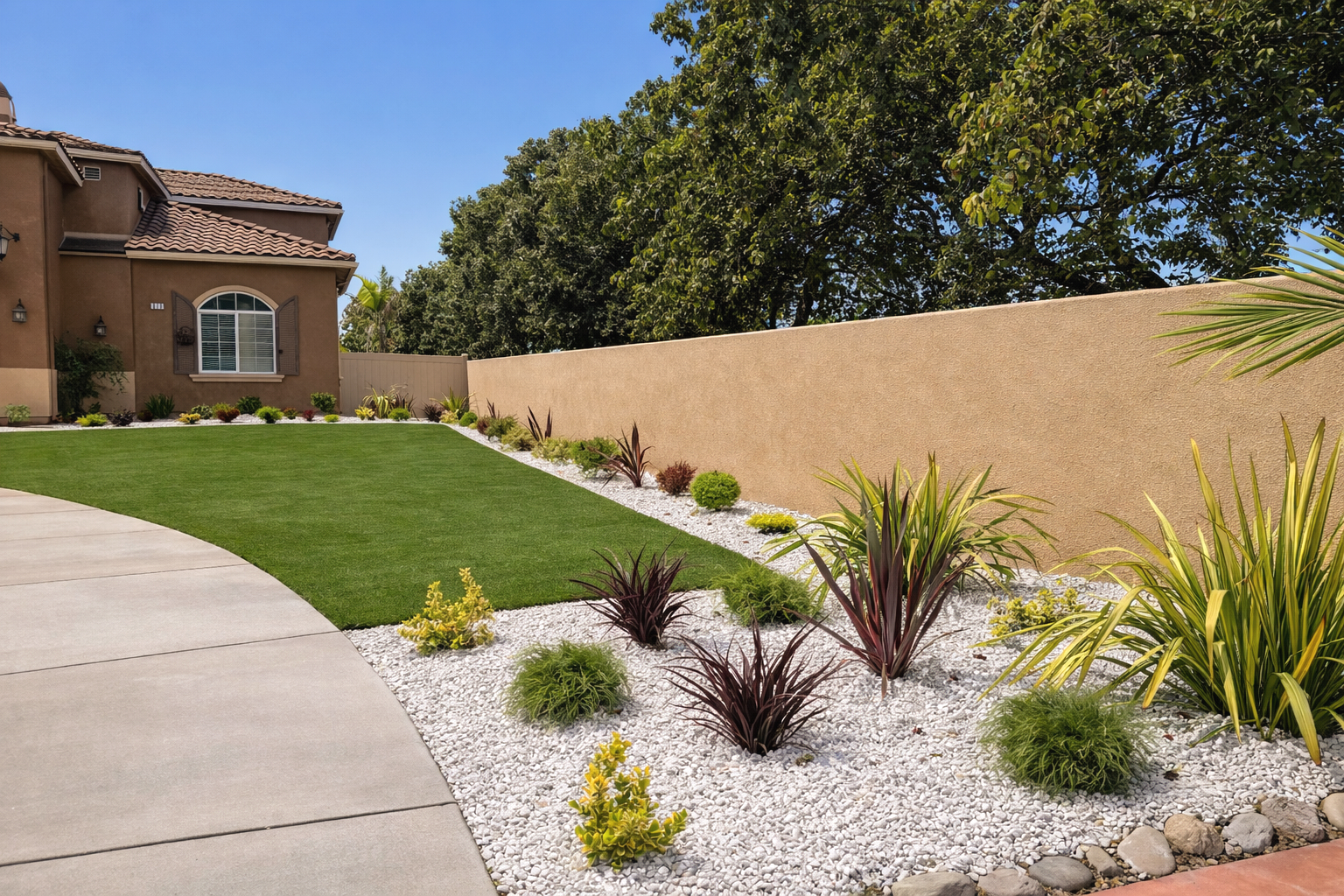
Pavers vs. Concrete for Ventura County Patios: Which Is Right for Your Backyard?
Pavers and poured concrete are the two most common patio and driveway surfaces we install across Ventura County — and the choice comes down to more than just price. Here is how they compare for coastal California backyards.
When homeowners in Ventura County ask whether they should use pavers or poured concrete for a new patio or driveway, the honest answer is: it depends on the soil, the slope, the look you want, and how you plan to use the space. We install both, and we install a lot of both, so here is a straightforward comparison based on what we actually see on jobsites from Ventura to Thousand Oaks.
Start with how each material behaves. Poured concrete is a single, continuous slab. It is strong, relatively inexpensive per square foot, and excellent for large, flat, high-traffic areas like a driveway or a long, straight walkway. The trade-off is that concrete is rigid. In Ventura County, where coastal soil can shift, settle, and heave with seasonal moisture, a rigid slab is vulnerable to cracking. A crack in poured concrete tends to keep running, and it is difficult to repair invisibly — you can patch it, but the patch is usually visible.
Pavers are the opposite philosophy. A paver patio is a modular surface — hundreds of individual units laid over a compacted aggregate base, with sand in the joints. That modularity is the whole point. If the ground shifts, a paver surface flexes with it instead of cracking. If a single paver is stained, cracked, or lifted by a tree root, you pull that one unit and replace it. The surface is repairable in a way a monolithic slab simply is not. For that reason alone, pavers tend to age more gracefully on Ventura County clay and sandy loam than poured concrete does.
Then there is drainage, which matters more on the coast than most people expect. Poured concrete is impervious — water runs off it, which means you have to engineer the slope and the drain system carefully or you end up with standing water or runoff toward the house. Pavers, by contrast, allow a surprising amount of water to move through the joints, especially when the base is graded correctly. In a region where stormwater rules and water-wise landscaping are increasingly part of the conversation, a paver surface can reduce runoff and the need for heavy drain infrastructure.
Consider the look. Poured concrete, even with a broom finish or stamped pattern, reads as one material. It can be clean and modern, but it is unmistakably concrete. Pavers give you color, texture, pattern, and scale options that are hard to match with a slab — from a warm, tumbled natural-stone look to a crisp, contemporary large-format paver. A herringbone driveway, a running-bond patio, or a circular inlay all become possible. For a front yard where curb appeal is the goal, pavers almost always win.
Now, cost. Poured concrete is typically the lower-cost option on a per-square-foot basis for the material and install, especially on larger flat areas. Pavers carry a higher upfront cost because of the base prep, the units themselves, and the labor of laying each piece by hand. But cost is not just the check you write on day one. Over a 15- or 20-year horizon, the repairable, crack-resistant nature of pavers often makes them the better value — fewer replacements, fewer eyesores, easier spot repairs. We tell clients: if the budget allows, and the space is a patio, front yard, or driveway where appearance and longevity matter, pavers are usually the right call.
Where does poured concrete still make sense in Ventura County? On truly large, flat, utilitarian surfaces where cost is the driver and the soil is stable — a long driveway, a side yard pad, a commercial loading area. We also use concrete for structural elements like seat walls, footings, and the bases that sit under some paver systems. In a backyard, if you are building an outdoor kitchen, we will often pour a concrete pad under the structure and run pavers around it, combining the strength of the slab where you need it with the look and repairability of pavers where you live.
The coastal climate plays into this, too. Salt air near the coast in Ventura and Port Hueneme, the marine layer, and the freeze-thaw cycle in the cooler inland valleys like Ojai and Santa Paula all stress outdoor surfaces over time. Pavers handle that stress distribution better than a single slab because there is no continuous crack line to propagate. Good base compaction — and we are obsessive about base — is what makes either surface last, but the modular nature of pavers gives you a margin of safety that concrete does not.
The most important variable is the base. A paver patio over a poorly compacted base will settle and dip no matter how nice the units are. A concrete slab over the same bad base will crack. We spend more time on grading, compaction, and drainage than on the visible surface, because the base is what determines whether your patio looks right in ten years. That is true for pavers and for concrete alike.
So which should you choose? If curb appeal, longevity, repairability, and drainage matter to you — and you can budget for it — go with pavers for patios, front yards, and driveways. If you need a large, flat, cost-driven surface and the soil is stable, poured concrete is a sensible, durable choice. Often the best answer is a combination: concrete where structure demands it, pavers where people live and look. The right way to decide is to walk the site, look at the soil and slope, and get an itemized estimate that shows the cost of each path before you commit.
If you are planning a patio, driveway, or full backyard transformation in Ventura County, request an itemized estimate. We will break out pavers, base, concrete, drainage, and labor on their own lines so you can see exactly what you are paying for — no mystery allowances. Every estimate starts with the soil and the slope, because that is what decides which surface actually works for your property.
Planning a project like this?
Request an itemized estimate — pavers, base, plants, irrigation, and labor each on their own line. No mystery allowances.
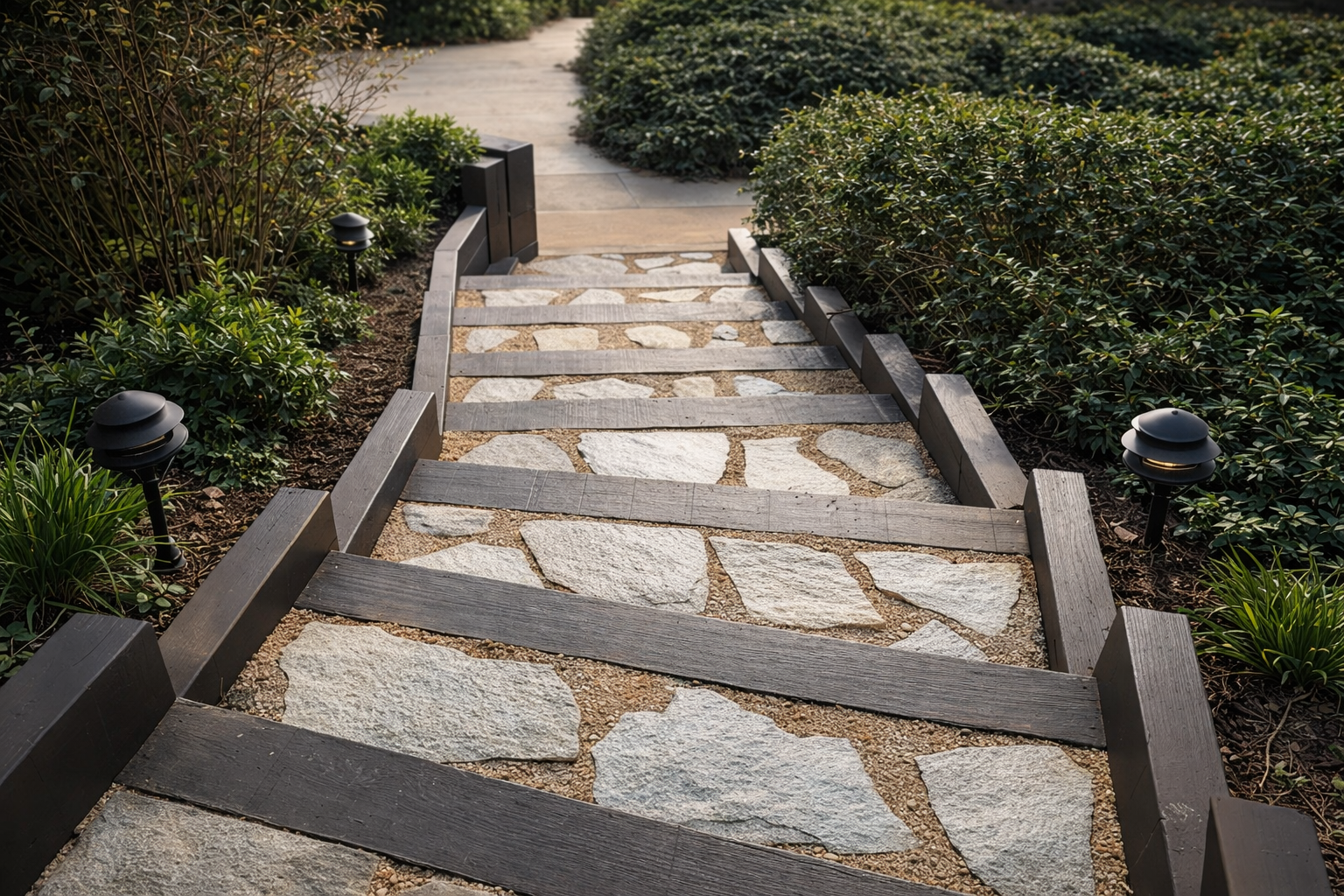
Artificial Turf vs. Sod in Southern California: The Honest Comparison
Sod gives you an instant, real lawn. Turf gives you a green yard with almost no water and no mowing. Here is how they actually compare for Southern California homes — the parts the product brochures leave out.
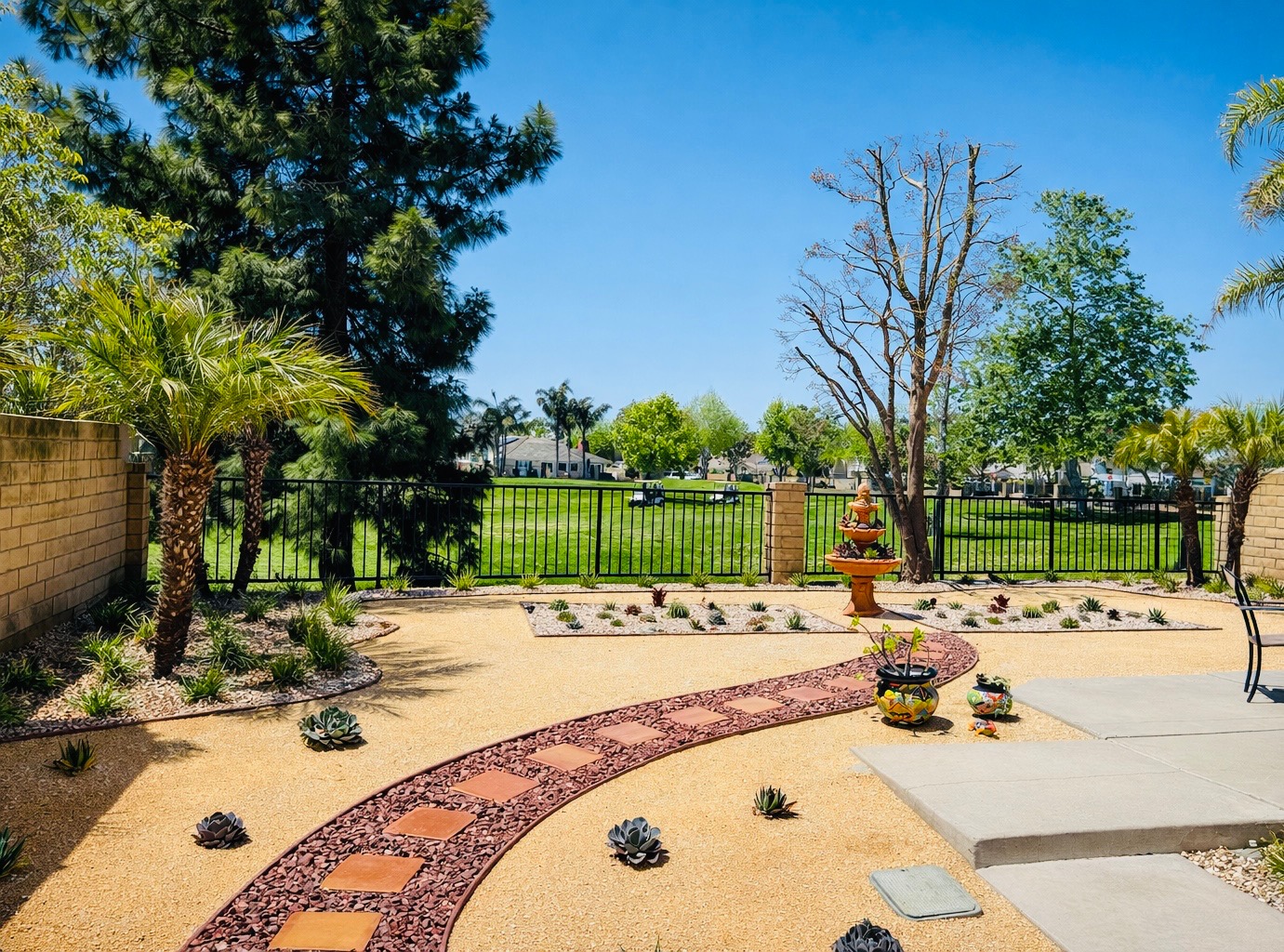
Drought-Tolerant Native Landscaping & Water-Wise Rebates in Ventura & Santa Barbara Counties
Replacing a lawn with California natives is one of the highest-value changes you can make in a Southern California yard — and local water districts may help pay for it. Here is how the conversion actually works.