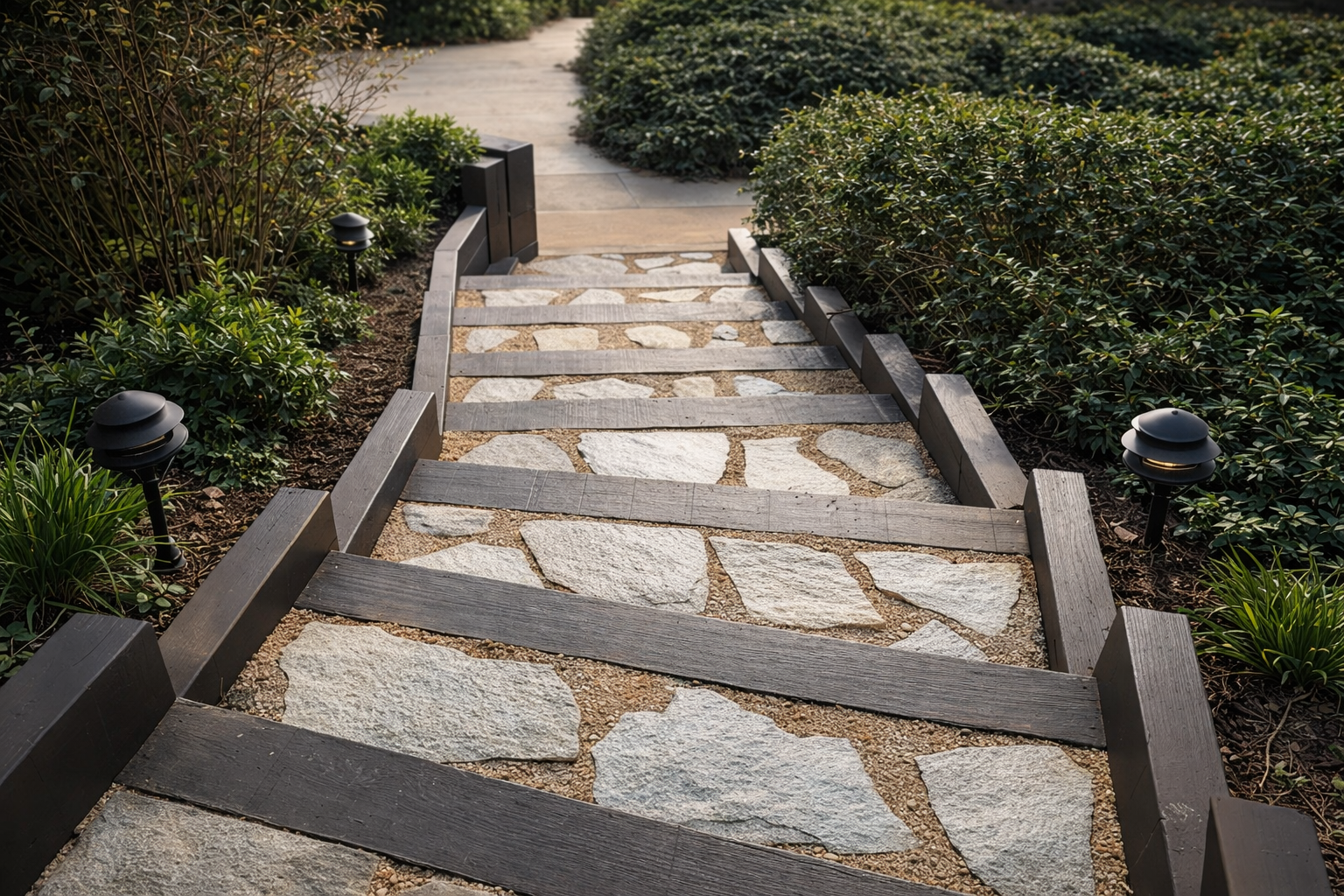
Artificial Turf vs. Sod in Southern California: The Honest Comparison
Sod gives you an instant, real lawn. Turf gives you a green yard with almost no water and no mowing. Here is how they actually compare for Southern California homes — the parts the product brochures leave out.
The artificial turf versus sod conversation is one we have on almost every residential landscape we build in Southern California. With water restrictions tightening, HOA rules evolving, and homeowners tired of paying to keep a lawn alive through a dry season, turf has gone from a compromise to a genuine option. But it is not the right answer for every yard. Here is the honest comparison.
Start with water, because that is usually what pushes people toward turf in the first place. A natural sod lawn in Ventura or Santa Barbara County can require a meaningful amount of irrigation to stay green through the dry months — often the single largest water use on a residential property. Artificial turf uses essentially none. In a region where water districts offer rebates for replacing turf grass with low-water landscapes, and where drought-tolerant and native planting is increasingly the default, that water savings is real and ongoing.
Maintenance is the other big driver. Sod demands mowing, edging, fertilizing, aerating, and regular irrigation checks. Skip it for a few weeks in summer and the lawn shows it. Artificial turf, by contrast, needs none of that. You brush it up occasionally to keep the blades standing, you rinse off dust and pet waste, and you may re-level the infill every year or two. That is it. For a rental property, a second home, a busy family, or anyone who would rather spend weekends on the patio than behind a mower, the maintenance case for turf is strong.
But turf is not maintenance-free, and it is not no-cost. The upfront installation of quality artificial turf is higher than sod — you are paying for the turf product itself, the excavation, the compacted base, the weed barrier, the infill, and the labor to seam and secure it properly. A cheap install with the wrong base or poor drainage will turn into a problem fast. The flip side is that the ongoing cost drops to near zero, so over a handful of years the total cost of ownership often favors turf, especially on smaller lawns where the install is more manageable.
Heat is the trade-off people do not always see coming. Artificial turf gets hot in direct sun — meaningfully hotter than real grass on a Southern California summer afternoon. If your yard is a high-use play area for kids or pets in full sun, that heat matters. In a shady front yard, a side strip, or a low-use back corner, it matters far less. We help clients think through where the turf actually goes and how the space is used before recommending it. Sometimes the answer is turf in the back where the family gathers, and drought-tolerant planting in the hot, sunny front.
Drainage is where a lot of turf installs fail and where our hardscape background pays off. Turf needs a properly compacted, graded base with real drainage — otherwise water pools underneath or sheets off the surface. With a sod lawn, water soaks in and percolates. With turf, you have engineered away the soil that used to absorb that water, so the base and the surrounding grading have to handle it. We install turf the way we install pavers: with the base and the slope designed to move water where it needs to go. That is the difference between a turf yard that stays clean and one that turns into a smelly, draining problem.
Then there is the look. Real grass is real grass — it has texture, it moves, it has that living quality. Modern artificial turf has gotten very good, and at a glance many products are hard to distinguish from a healthy lawn, but up close and over years it is still a synthetic surface. Some people love the perfectly green, year-round look. Others find it less appealing than a living landscape. This is a personal call, and it is worth seeing and touching samples before deciding. For a front yard where curb appeal is the priority, a combination of turf and drought-tolerant planting often reads more designed and more valuable than a wall-to-wall synthetic lawn.
Pets change the math. If you have dogs, natural sod takes a beating — burn spots, digging, worn paths. Turf handles pet wear far better, but pet waste on turf needs to be rinsed, and you want a product and infill designed for drainage and odor control. Done right, a pet turf area can be a great solution. Done cheaply, it becomes the opposite. We will tell you honestly whether your yard and your dogs are a good fit for turf.
HOA and city rules matter in Southern California, too. Some HOAs restrict artificial turf in front yards. Some cities and water districts, by contrast, encourage replacing lawn with turf or natives and may offer rebates. Before you decide, check your HOA guidelines and your local water district — we help clients navigate both, and we prepare the submittal packets when architectural review is required.
So which is right for you? If you want a living lawn, you enjoy maintaining it, and the water budget works, sod is a beautiful, instant result. If you want year-round green with no water and no mowing, and the space and use pattern make sense, quality artificial turf is an excellent investment. Often the best answer is neither a full lawn nor full turf — it is a designed mix: turf in a defined area where the family gathers, drought-tolerant and native planting around it, and pavers or decomposed granite for the paths. That mix is water-wise, low-maintenance, and looks like a designed landscape rather than a surface swap.
The right way to decide is on your site. We look at sun exposure, soil, drainage, how the yard is used, and your water and maintenance goals, then give you an itemized estimate that shows the cost of sod, turf, or a combined landscape so you can compare honestly. No pressure toward one product — just the trade-offs laid out clearly, the way we do every estimate.
Planning a project like this?
Request an itemized estimate — pavers, base, plants, irrigation, and labor each on their own line. No mystery allowances.
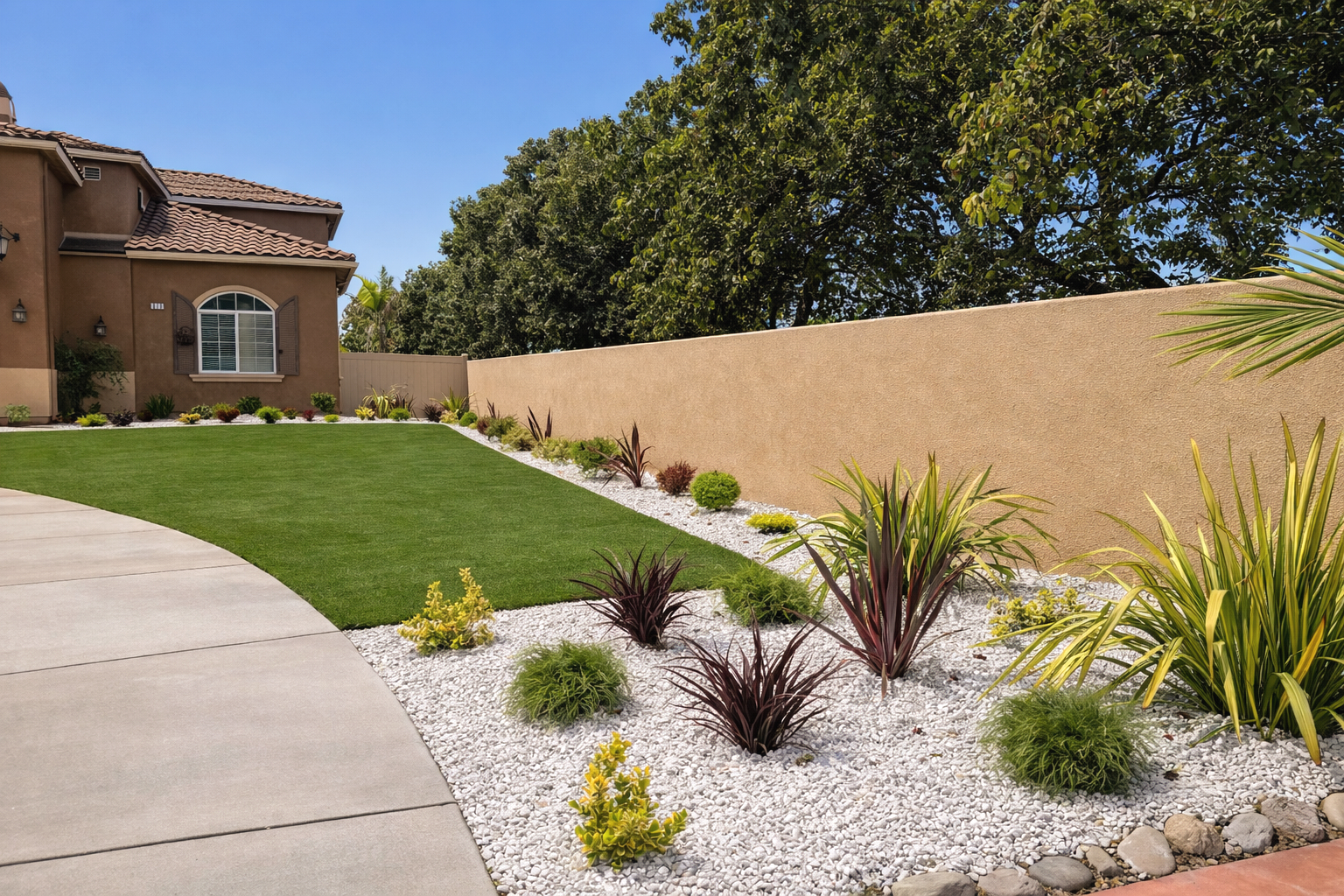
Pavers vs. Concrete for Ventura County Patios: Which Is Right for Your Backyard?
Pavers and poured concrete are the two most common patio and driveway surfaces we install across Ventura County — and the choice comes down to more than just price. Here is how they compare for coastal California backyards.
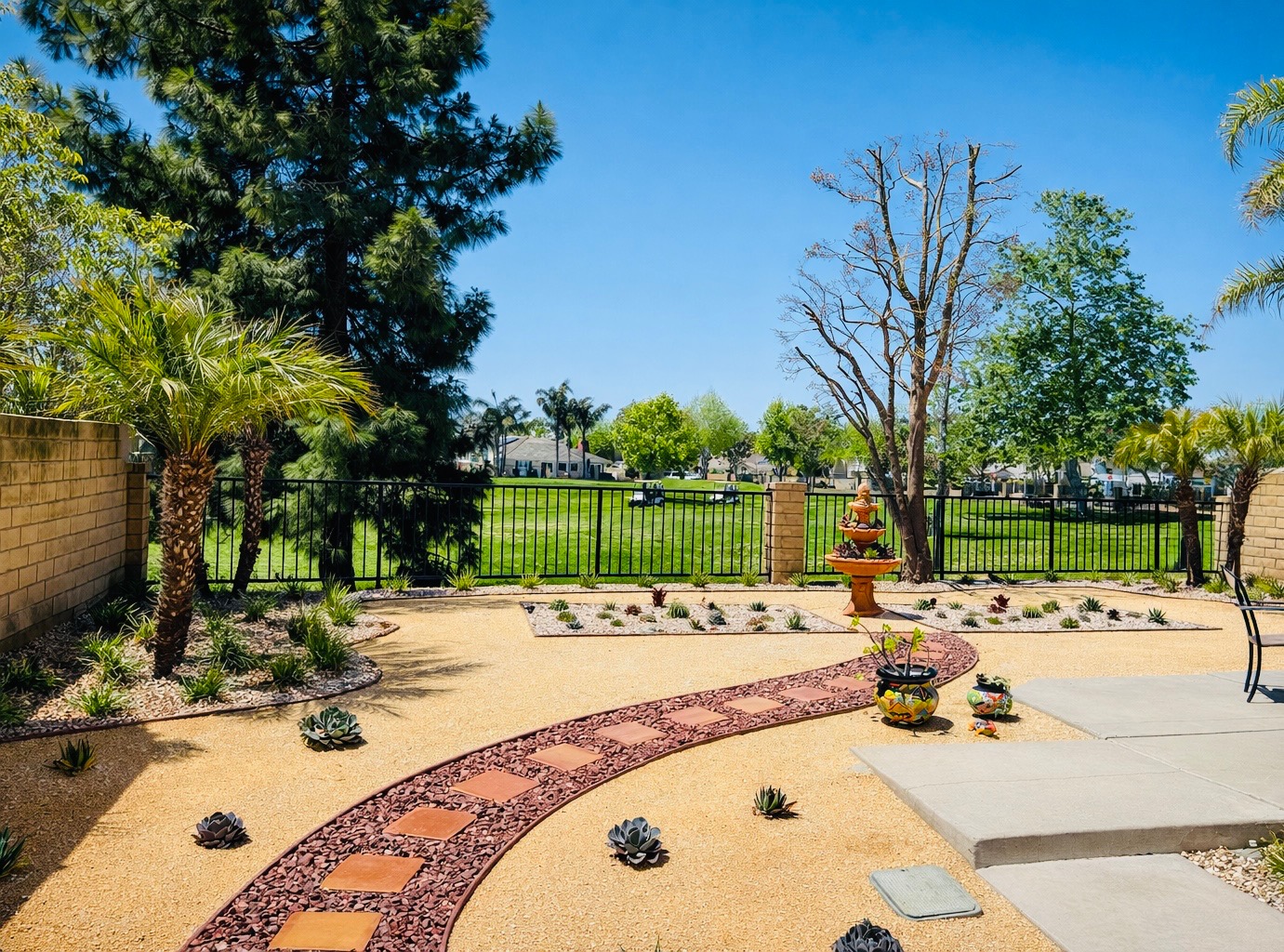
Drought-Tolerant Native Landscaping & Water-Wise Rebates in Ventura & Santa Barbara Counties
Replacing a lawn with California natives is one of the highest-value changes you can make in a Southern California yard — and local water districts may help pay for it. Here is how the conversion actually works.