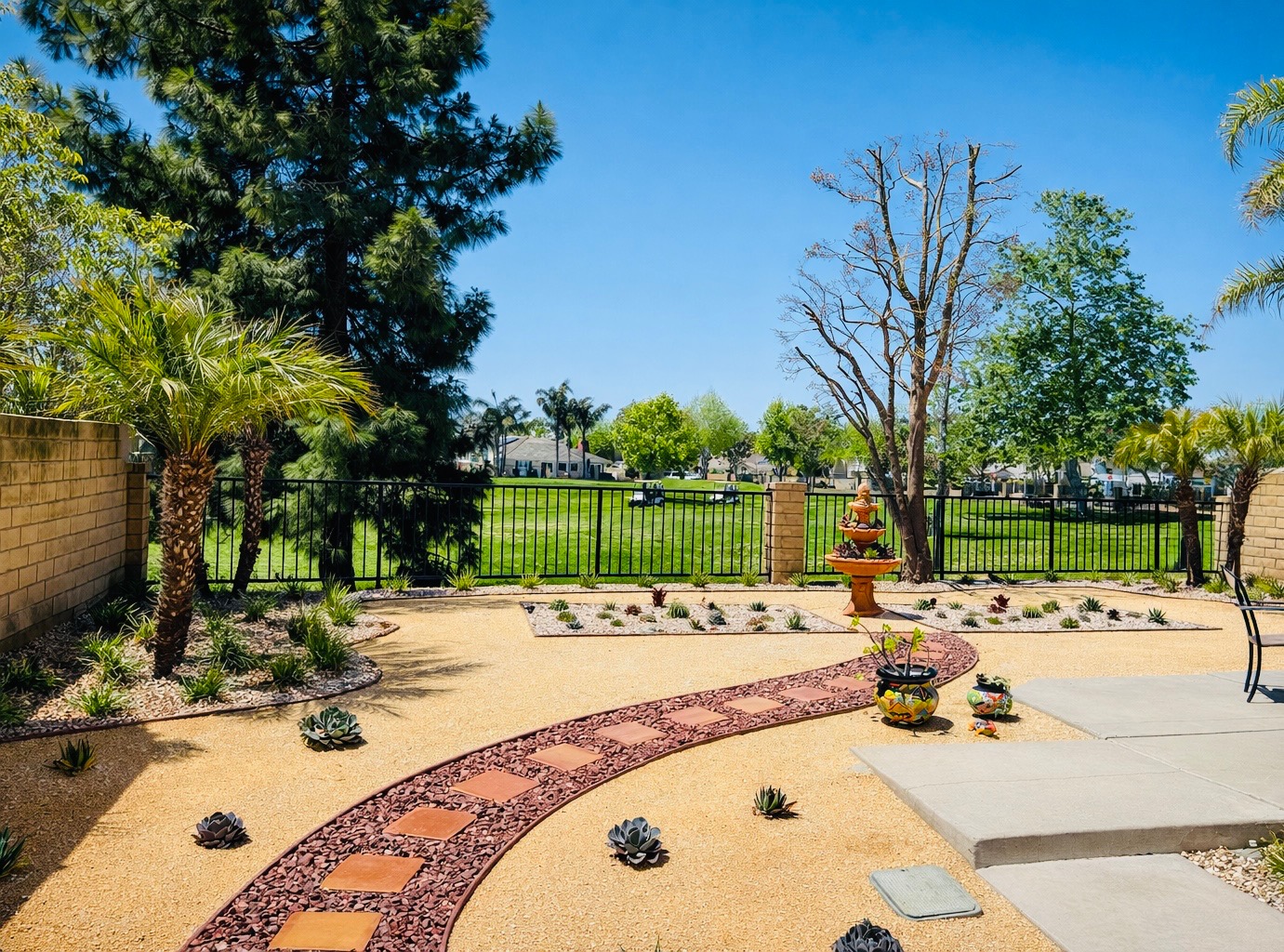
Drought-Tolerant Native Landscaping & Water-Wise Rebates in Ventura & Santa Barbara Counties
Replacing a lawn with California natives is one of the highest-value changes you can make in a Southern California yard — and local water districts may help pay for it. Here is how the conversion actually works.
Drought-tolerant and California native landscaping is no longer a fringe choice in Ventura and Santa Barbara Counties — it is becoming the default for homeowners who want a landscape that looks designed, supports pollinators, and uses a fraction of the water of a lawn. With local water districts offering rebates for replacing turf grass, the economics have shifted in favor of conversion. Here is how the process actually works when we do it.
It starts with the lawn. A turf grass lawn in our climate is, frankly, a water habit. It needs regular irrigation to stay green through the dry season, it needs mowing and feeding, and in a drought it is the first thing to suffer. Replacing it with a drought-tolerant, native, or Mediterranean planting scheme cuts outdoor water use dramatically — often by more than half — and replaces a weekly maintenance routine with a landscape that largely takes care of itself once it is established.
The design is what makes a drought-tolerant yard look like a landscape instead of a gravel pit. The mistake people fear — and sometimes see — is the sparse, bare look of a poorly planned xeriscape. A well-designed native landscape is the opposite: layered, textured, and alive. We use a mix of California natives and climate-adapted Mediterranean plants, grouped by water need, with structure from specimen shrubs and trees, color from seasonal bloomers, and ground-level texture from low-water groundcovers and grasses. Decomposed granite, pavers, or stepping stones give you paths and usable space without adding thirsty lawn.
Plant selection is region-specific. In the cooler coastal influence of Ventura, Carpinteria, and Santa Barbara, we lean into plants that like mild, humid air — salvia, ceanothus, manzanita, California buckwheat, and coastal sunflowers. In the warmer, drier inland valleys like Simi Valley, Santa Clarita-adjacent areas, and the Ojai valley, we shift toward plants that handle heat and low humidity — some of the same natives plus tougher Mediterranean species like rosemary, lavender, and rockrose. The right plant in the right microclimate is what makes a native landscape thrive instead of just survive.
Soil and drainage matter more with natives than with lawn, not less. California natives are adapted to our native soils, which are often lean and well-drained — they do not want rich, amended, constantly wet soil. Over-watering and over-feeding is how you kill a native landscape. We test the soil, amend only where needed, and grade for drainage so the roots get oxygen and the water moves through rather than pooling. Good drainage is also what keeps a native landscape from developing the root rot that kills otherwise tough plants.
Irrigation is where most conversions go wrong or right. The whole point of a drought-tolerant landscape is lower water use, but that does not mean no irrigation — it means the right irrigation. We install drip irrigation and low-volume emitters that put water at the root zone instead of spraying it into the air, where most of it evaporates in a Southern California afternoon. We pair it with a smart controller that adjusts to weather and soil moisture, so the system waters when the plants actually need it and not on a fixed clock. For the first year or two, while plants establish, the irrigation runs more often; once the landscape is established, it drops to a deep, infrequent schedule that encourages deep roots and drought tolerance.
Mulch is not an afterthought — it is a tool. A 2-to-3 inch layer of organic mulch or bark around the planting suppresses weeds, keeps the soil surface cool, reduces evaporation, and breaks down slowly to feed the soil. It is one of the cheapest, highest-impact things you can do for a water-wise landscape, and it finishes the look so the yard reads as designed and maintained rather than raw.
Now, the rebate part — and this is worth talking to your local water district about. Many water districts in Ventura and Santa Barbara Counties offer cash rebates for replacing turf grass with water-wise landscaping, often calculated per square foot of lawn removed. The programs typically require a pre-conversion inspection, a landscape plan, approved plant lists, and qualifying irrigation changes, and the rebate is issued after a post-conversion inspection confirms the work. Rules, amounts, and availability vary by district and change over time, so the process starts with a call to your water provider. We are familiar with these programs and can build the conversion to meet the rebate requirements — but the rebate itself is between you and your water district.
The conversion process, step by step, looks like this: we assess the site and soil, design the new landscape and irrigation plan, submit the plan to your water district if a rebate applies, remove the lawn (sometimes by sheet mulching, sometimes by physical removal), grade and amend the soil, install the drip irrigation and smart controller, plant, mulch, and walk you through the establishment-care schedule. After the post-inspection, you receive the rebate if your district and program qualify. The whole build is handled by our dedicated crews, the same way we run every project.
What you get at the end is a landscape that looks better than the lawn it replaced for most of the year, costs a fraction as much to water, needs a fraction of the maintenance, supports birds and pollinators, and may have been partly paid for by your water district. For a front yard where curb appeal matters and a back yard where you want to enjoy the space instead of maintaining it, it is one of the best investments you can make in a Southern California property.
If you are considering a drought-tolerant or native landscape conversion — with or without a rebate — request an itemized estimate. We break out plants, soil, irrigation, mulch, and labor on their own lines, and we design to your site, your water district, and your HOA if you have one. That is how a water-wise landscape actually gets built: deliberately, with the right plants in the right soil, and the irrigation and drainage designed to let it thrive.
Planning a project like this?
Request an itemized estimate — pavers, base, plants, irrigation, and labor each on their own line. No mystery allowances.
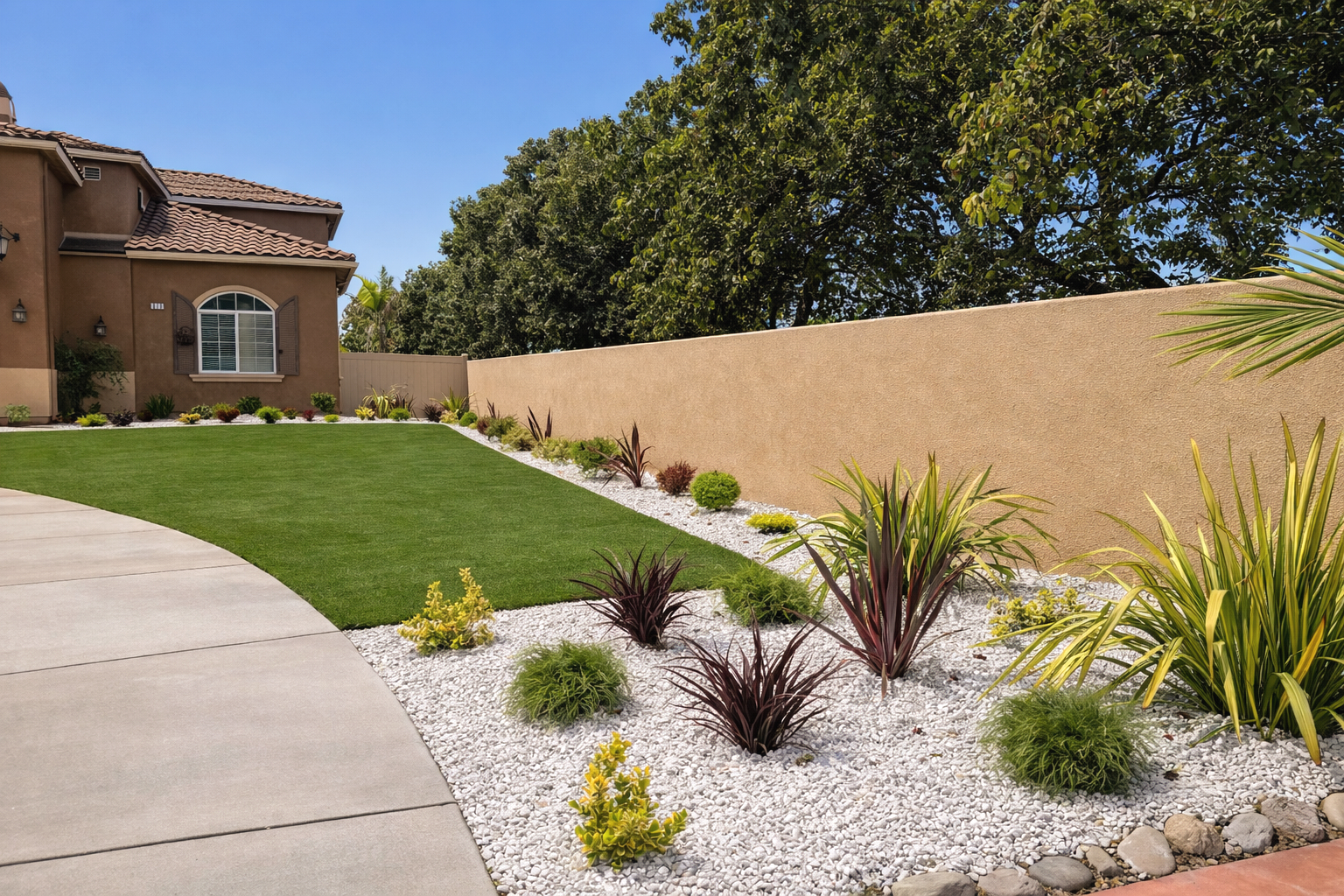
Pavers vs. Concrete for Ventura County Patios: Which Is Right for Your Backyard?
Pavers and poured concrete are the two most common patio and driveway surfaces we install across Ventura County — and the choice comes down to more than just price. Here is how they compare for coastal California backyards.
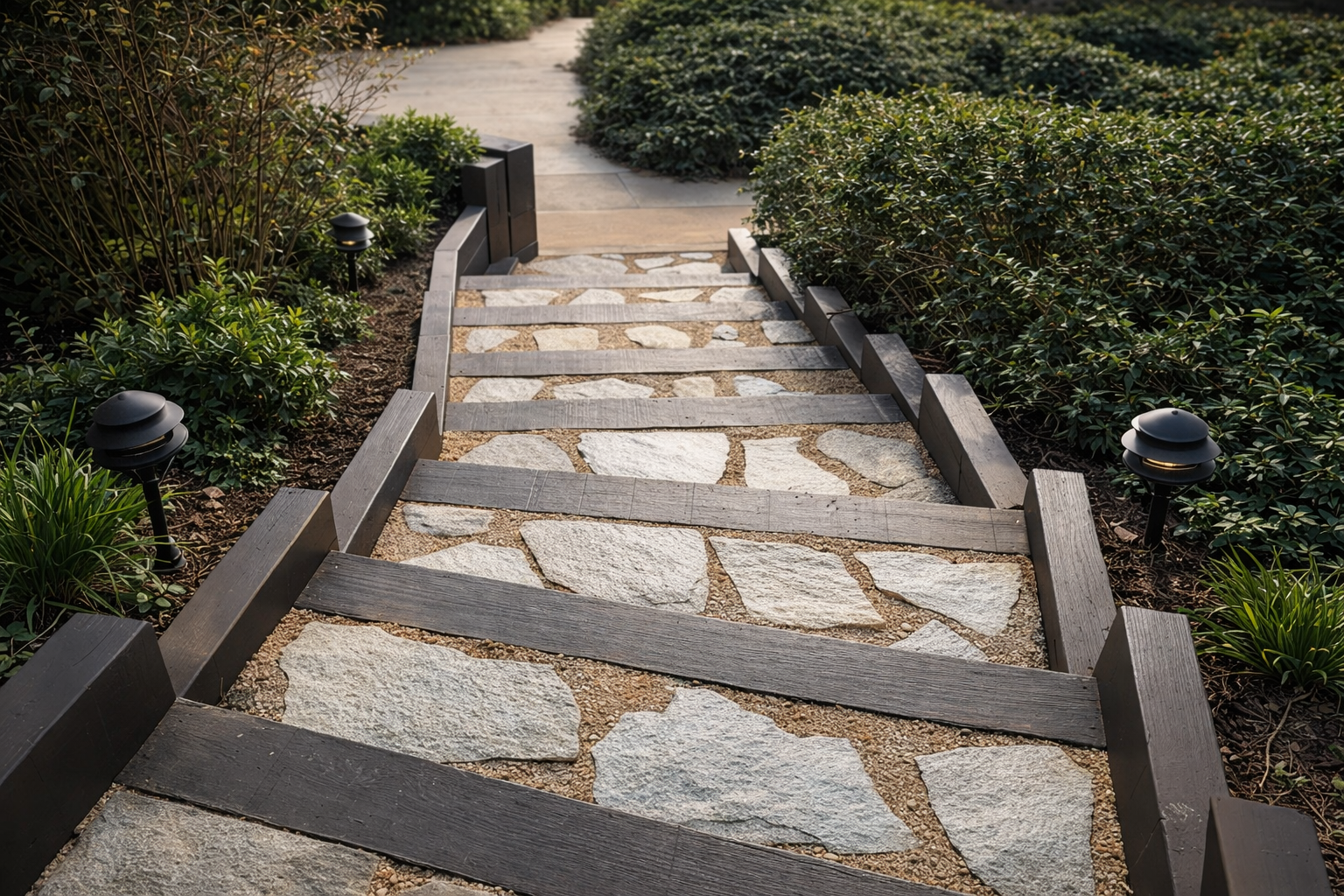
Artificial Turf vs. Sod in Southern California: The Honest Comparison
Sod gives you an instant, real lawn. Turf gives you a green yard with almost no water and no mowing. Here is how they actually compare for Southern California homes — the parts the product brochures leave out.